

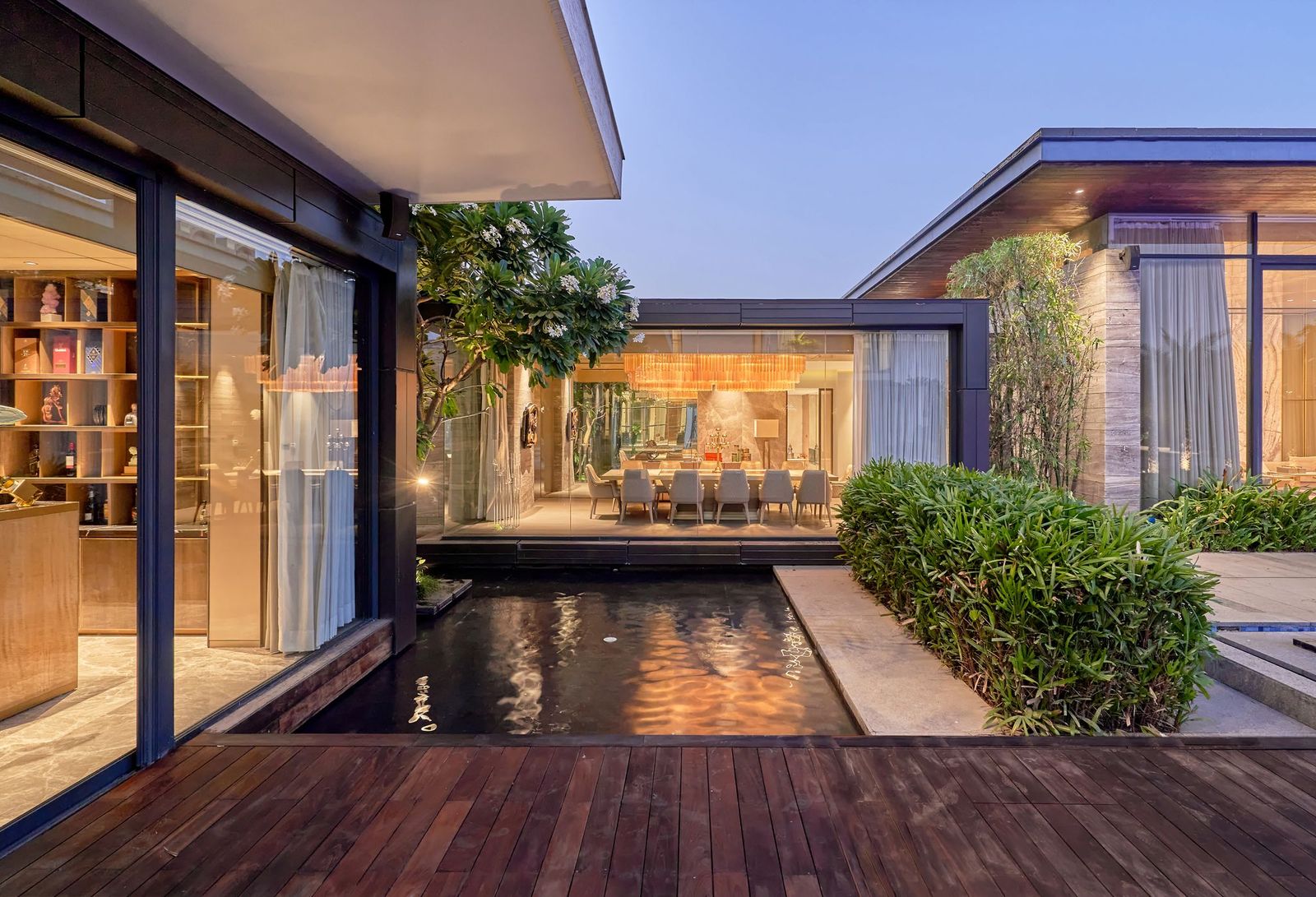
Double Glazed Aluminium Windows in India: Benefits & What to Buy
Most people don’t think much about windows while designing a home.
Until summer arrives.
The room starts heating up by noon. Traffic noise somehow enters even with the windows shut. During the monsoon, the glass feels damp around the edges. And suddenly, the window becomes something you notice every single day.
That’s usually when people start looking at double-glazed aluminium windows seriously.
Not because it sounds premium. Because comfort inside the house starts depending on it.
Especially in Indian cities, where heat, dust, humidity, and outside noise are becoming harder to ignore.
What Are Double-Glazed Aluminium Windows?
Double glazing simply means two glass panes instead of one.
Between those two panes is a sealed gap — called an insulated glass unit or IGU. That cavity slows down heat transfer and improves sound insulation.
Inside the gap, manufacturers may use:
- Regular dry air
- Argon gas
- Spacer bars around the edge
Argon performs better because it transfers less heat than normal air. The type and width of the spacer also affect how well the unit performs over time — warm-edge spacers reduce condensation at the glass edges better than standard aluminium spacers.
The biggest difference between single glazing and DGU systems is performance. Single glass reacts quickly to outside temperature. Double glazing creates a barrier, helping interiors stay more stable.
People also ask about triple glazing.
In colder countries, triple glazing makes sense. But in most Indian conditions, a good double-glazed system already delivers strong thermal and acoustic performance without making the window unnecessarily heavy or expensive. There are specific situations where it may be worth considering — very high-altitude locations or extreme acoustic requirements — but for most Indian homes, DGU with the right glass build-up is the practical answer.
Why Double Glazed Aluminium Windows Make Sense for Indian Homes
Heat reduction during summer
This is the first thing homeowners notice.
Large glass windows look beautiful, but they also allow heat inside very quickly if the glazing is poor. Double glazing slows heat transfer — especially in west-facing rooms where afternoon heat can become intense.
In cities like Ahmedabad, Jaipur, and Delhi, where summers push past 45°C, the difference between single- and double-glazing in a west-facing room is not subtle. If you’re designing for those conditions, this guide on window styles for cooler homes is worth reading alongside.
Noise reduction
If your apartment faces a busy road, metro line, or airport route, you already know how tiring constant outside noise can feel.
Double glazing helps reduce traffic and city noise when combined with proper frame sealing and a quality aluminium system. It’s not complete silence, but enough to change how a room feels. ALCOI has a more detailed breakdown on how aluminium windows reduce unwanted noise if this is a priority for your project.
Lower AC load and electricity bills
Cooling systems work harder when heat keeps entering through the glass.
Better insulated windows reduce that load over time. In larger homes and villas with significant glass area, the reduction in AC usage becomes meaningful — especially in months where the AC runs continuously. The broader case for energy-efficient aluminium windows covers this in more detail.
Condensation control during the monsoon
Single glazing often develops moisture on the glass surface because it reacts quickly to humidity and temperature changes. During monsoon months in coastal cities and high-humidity regions, this becomes a recurring problem.
Double glazing reduces this because the inner pane stays closer to the indoor temperature. The sealed cavity prevents moisture from forming on the visible glass surface in most conditions.
UV protection
Certain glass coatings used in DGU systems — particularly Low-E coatings — also reduce UV transmission. This helps protect flooring, curtains, wooden furniture, and upholstery from fading over time. Useful in rooms with significant direct sun exposure.
Performance Ratings You Should Understand Before Buying
This is where many buyers get confused — and where decisions often go wrong.
Most people compare only the glass thickness. But actual performance depends on multiple factors working together.
U-value
This measures how much heat passes through the window overall — glass and frame combined.
Lower U-values mean better insulation. In Indian climate zones, the target U-value depends on the ECBC climate zone in which the building sits. A good double-glazed aluminium system with Low-E glass typically achieves U-values between 1.8–2.4 W/m²K, depending on configuration — significantly better than standard single glazing at 5.8 W/m²K.
SHGC (Solar Heat Gain Coefficient)
Very important for Indian conditions — arguably more so than U-value in hot climates.
SHGC measures how much solar radiation enters the room through the glass. Lower SHGC values reduce unwanted heat gain. For south and west-facing windows in Indian homes, specifying glass with a lower SHGC is often the single most impactful decision for summer comfort.
Sound Reduction Index (Rw)
This measures acoustic performance in decibels.
But thicker glass alone doesn’t guarantee quieter interiors. Frame sealing quality, spacer type, and installation all affect real-world performance. A well-sealed double-glazed aluminium system with a laminated inner pane typically achieves Rw values of 35–42 dB depending on the glass build-up.
ECBC compliance
Many commercial and premium residential projects now consider ECBC (Energy Conservation Building Code) requirements when selecting glazing systems. ECBC Table 4.1 sets maximum U-value and SHGC thresholds by climate zone for new commercial buildings. For residential, ECBC compliance is increasingly being adopted in large developments.
Low-E coatings
Low-E (low-emissivity) glass reflects heat while still allowing natural daylight inside.
Hard-coat Low-E is more durable and suitable for external panes or single-glazed applications. Soft-coat Low-E performs better thermally and is used inside the sealed IGU cavity, where it is protected from the environment. That balance between heat control and light transmission is why Low-E is now standard in most quality DGU specifications. See also: 6 ways aluminium window frames boost energy efficiency.
Types of Double Glazed Aluminium Windows Available in India
Sliding windows
Popular in apartments because they save floor space and work well for balconies and bedrooms. If you’re in a compact flat, slim aluminium sliding windows with DGU combine space-saving design with better thermal performance. ALCOI’s AluBUILD and AluLITE sliding systems both support double-glazed units.
Casement windows
These usually offer tighter sealing than sliding systems, making them better for thermal and acoustic performance. The compression seal on a well-designed casement window reduces air and water infiltration more effectively than a sliding track system.
Tilt and turn windows
Still less common in India, but increasingly used in premium homes because they combine ventilation, security, and insulation in one system. The tilt position allows controlled ventilation while maintaining most of the acoustic seal.
System aluminium windows
These are engineered systems where profiles, hardware, drainage, and sealing are designed together — not assembled randomly from separate components.
That consistency is why system windows generally outperform locally fabricated alternatives in long-term thermal and acoustic performance. The difference between system windows and standard fabricated windows is worth understanding before you specify.
Double Glazed Aluminium vs Other Options
uPVC offers insulation benefits, but aluminium handles larger openings and slim profiles more effectively. For compact apartments, aluminium’s structural capability at narrow frame widths is a practical advantage that uPVC cannot match at the same scale. The full uPVC vs aluminium comparison covers this in detail.
Wood looks elegant, but Indian weather makes long-term maintenance difficult — particularly in humid and coastal areas where wood warping, swelling, and paint degradation are recurring problems.
Single glazing vs DGU — the difference in comfort becomes noticeable surprisingly fast, especially in hot cities or rooms with significant glass area. The upfront cost difference pays back through AC savings and reduced noise over the building’s lifespan. How long aluminium window systems last gives useful context for evaluating them over time.
Secondary glazing helps in some cases — particularly where existing windows cannot be replaced — but integrated DGU systems generally perform better long-term because the sealed unit is factory-made and consistent.
Where Double Glazed Windows Matter Most in India
Double glazing makes the biggest practical difference in:
- Apartments near highways, metro lines, or airports — where noise reduction is the primary driver
- West and south-facing rooms — where afternoon solar heat gain is most intense
- Hot cities — Ahmedabad, Delhi, Jaipur, Rajasthan, Pune — where summer temperatures make indoor comfort a serious concern
- Coastal homes — facing humidity, salt air, and UV exposure. Aluminium fenestration for coastal homes covers the coastal-specific considerations in more detail.
- Large glass openings in villas and premium residences — where the window-to-wall ratio is high, and performance matters more. See the impact of the window-to-wall ratio on building energy use for context.
- Commercial offices and hotels — where large glazed facades and continuous air-conditioning make thermal performance a direct operating cost issue
The larger the glass area, the more performance matters. And the more the right specification pays back over time.
What Affects Double Glazed Aluminium Window Pricing?
Price depends on several factors working together:
- Glass specification — standard clear DGU vs Low-E glass vs laminated vs toughened
- Gas filling — argon-filled units cost more than air-filled but perform better thermally
- Spacer quality — warm-edge spacers cost more than standard aluminium spacers, but reduce edge condensation
- Aluminium profile system — standard fabricated vs engineered system windows
- Thermal break — thermally broken profiles add cost but improve overall frame performance significantly
- Hardware — quality multipoint locking, handles, and rollers affect both performance and longevity
- Installation quality — this gets underestimated consistently. Poor installation ruins even a premium window. Frame-to-wall sealing, glass setting, and drainage all need to be done correctly.
For a full picture of what drives aluminium window costs in India, the pricing guide here is a useful reference before planning a budget.
ALCOI India: Double Glazed Aluminium Window Systems
Good window performance doesn’t come from glass alone.
It comes from how the complete system works together over time — frame, glass, hardware, sealing, and installation.
ALCOI India offers double-glazed aluminium window systems with engineered profiles, DGU-compatible configurations, and glazing options designed for Indian residential and commercial conditions.
What’s worth knowing about ALCOI’s systems specifically:
- All systems are independently tested and certified under both American (ASTM) and European (EN) standards by Eminent International Testing Centre — water tightness confirmed at 600 Pa with no seepage (EN 1027, Class 9A), air infiltration passed at 600 Pa (EN 12207, Class 4A). See the full performance certification and airtight performance details.
- ALCOI’s sliding systems — AluBUILD and AluLITE — support both single and double-glazed unit configurations with EPDM gasket sealing for consistent air and water tightness
- SkyLITE lift-and-slide supports up to 7.5 sqm panels and 300 kg shutters — suited for large glass openings in villas and premium apartments where DGU performance matters most
- All profiles are extruded from aluminium alloy 6060/6063 T5/T6 — structural consistency across openings, not just the tested sample
- IS 875 Part III structural calculations and IS 1948:2024-aligned systems are available as standard for commercial and premium residential projects
- 500+ completed projects, 25-city service presence, ALCOI Advantage covers the full project support model
Because in the long run, the real value of a window is not how it looks on installation day.
It’s how comfortable the space still feels years later.
FAQs
Are double-glazed aluminium windows worth it in India? Yes — especially in cities with extreme heat, traffic noise, or high humidity. Double-glazed aluminium windows improve indoor comfort by reducing heat transfer, outside noise, and AC load. In west and south-facing rooms, the difference in summer comfort compared to single glazing is noticeable within the first season. Over time, most homeowners find the investment pays back through lower energy bills and a better quality of life indoors.
What is the price of double-glazed aluminium windows per sq ft in India? Price depends on the aluminium profile system, glass specification (standard DGU, Low-E, argon-filled, laminated), hardware quality, and whether thermally broken frames are included. The full pricing guide here gives useful context. As a general rule, double-glazed aluminium windows cost more than single-glazed systems, but the performance gap — in heat reduction, noise control, and AC savings — justifies the difference in most Indian conditions.
Do double-glazed windows really reduce heat in Indian summers? Yes. Double glazing reduces heat transfer into the room compared to single glass. When combined with Low-E glass, the improvement in west and south-facing rooms is significant. In cities like Ahmedabad and Delhi, where peak temperatures regularly exceed 42–45°C, a quality DGU system with appropriate SHGC can meaningfully reduce how quickly a room heats up during afternoon hours.
What is the difference between double-glazed and thermally broken aluminium windows? Double glazing refers to the glass, two panes with a sealed, insulated gap between them. Thermally broken refers to the frame — a non-metal polyamide barrier inside the aluminium profile that reduces heat conduction through the frame itself. For the best thermal performance, both are combined: a thermally broken frame carrying a double-glazed unit. Each addresses a different heat path — glass or frame — and together they significantly improve the overall window’s thermal performance.
Can existing aluminium window frames be upgraded to double glazing? Sometimes. It depends on whether the existing frame is structurally capable of supporting the additional weight and thickness of a DGU — typically 24–40mm compared to 6mm single glass. Older or lighter aluminium sections often cannot. Professional inspection of the existing frame before any upgrade is essential. In most cases where performance is the goal, replacing the full window system delivers better long-term results than retrofitting glass into an existing frame.
Which cities in India benefit most from double-glazed aluminium windows? Cities with extreme summer heat (Ahmedabad, Jaipur, Delhi, Nagpur, Pune), high urban noise (Mumbai, Bangalore, Chennai, Hyderabad), and coastal humidity (Mumbai, Kochi, Chennai, Visakhapatnam) all benefit significantly. The combination of heat, noise, and humidity that most Indian metro residents deal with makes DGU systems a practical upgrade — not just a premium one. Aluminium fenestration for coastal homes and the Indian climate conditions guide are both worth reading for location-specific context.
Does ALCOI India supply double-glazed aluminium windows for residential projects? Yes. ALCOI’s sliding, casement, and lift-and-slide systems all support double-glazed unit configurations. Whether it’s a 2BHK apartment balcony window or large-format glass in a luxury villa, ALCOI offers engineered aluminium systems with DGU compatibility, tested performance data, and project-specific support. Visit alcoi. in or, call +91 987 875 0055 to discuss your project.