

Aluminium Louvre Windows: Benefits, Uses & Design Options for Indian Homes
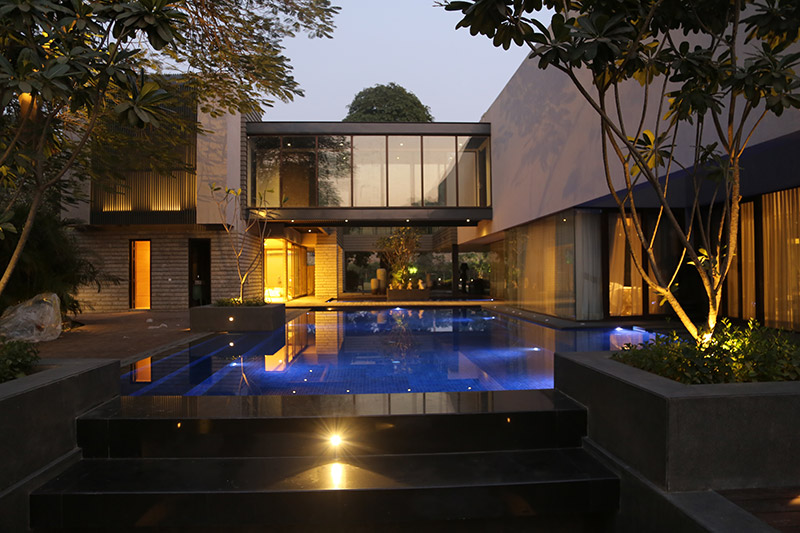
Poonam Juneja Residence
Location: New Delhi Architect: Habitat Architects
There are some window types you only start noticing when normal ones stop working properly.
Louvre windows are one of those.
They are not usually the first choice in modern Indian homes. You don’t see them highlighted in brochures or living room designs. But they keep showing up in bathrooms, utility areas, staircases, and sometimes even kitchens.
Not because they are trendy. But because they solve a very specific problem that sliding or fixed windows don’t always handle well — continuous airflow.
In Indian conditions — heat, humidity, and monsoons — that problem shows up more often than most people expect.
What Are Aluminium Louvre Windows?
At the simplest level, a louvre window is a set of angled blades fixed inside a frame. These blades can either stay fixed or move depending on the system.
Air passes through the gaps between the blades instead of requiring a fully open window.
That’s the core idea. But the real performance depends on small details — blade angle, spacing, and how tightly the frame holds everything together.
Fixed vs adjustable louvres
Fixed louvres stay at one angle. Simple, but you don’t get control.
Adjustable ones let you change airflow direction. In Indian homes, this flexibility matters more because weather changes fast — dry heat one month, heavy rain the next.
Louvre vs jalousie windows
People still mix these two.
Jalousie windows are older systems, often with thinner blades and weaker sealing. They were common decades ago.
Modern aluminium louvre windows are structurally stronger, more stable in wind, and designed for longer use. Same concept, very different build quality.
Louvre windows vs ventilation grilles
A grille just lets air pass.
A louvre window lets you control how air enters, how much light comes in, and to some extent privacy. That control is what makes them useful in liveable spaces, not just service areas.
Motorised louvres
In premium buildings, you sometimes see motorised versions where blade angles adjust automatically.
This is still not common in most Indian homes, but it’s slowly appearing in high-end villas and commercial facades. The future of smart and automated window systems is gradually making this more accessible.
Why Aluminium Louvre Windows Are Still Used
If you ask site engineers, they rarely talk about louvres as a design feature.
They talk about them as a fix.
Bathrooms that never dry properly. Utility rooms that feel closed off. Kitchens that trap heat even with exhaust fans running.
Louvres solve these problems without electricity or moving parts. That’s why they stay relevant even today — they don’t depend on systems. They just keep air moving.
Where They Actually Work Best in Indian Homes
Bathrooms and wet areas
This is the most common use. Humidity builds up quickly in Indian bathrooms. If air doesn’t move, surfaces start feeling damp even if everything is clean. A louvre window quietly solves that.
Kitchens
Especially in homes where cooking is frequent and heavy. Smoke and heat need constant escape, not occasional ventilation.
Staircases
In smaller buildings, louvres are used for passive airflow movement between floors — a simple, effective stack ventilation solution.
Utility and storage rooms
Almost a standard use case now. These spaces need ventilation but not the complexity of openable windows.
Bedrooms
Mixed use case. Some people like airflow. Others prefer sealed environments for noise and dust control. Louvres don’t have a fixed role here — it depends on the room’s location and exposure. For noise-sensitive bedrooms, casement or sliding systems with proper sealing typically work better.
Living rooms
Usually avoided unless combined with fixed glass or used in secondary ventilation zones.
Aluminium Louvre Windows for Industrial and Commercial Use
In commercial and industrial spaces, louvre windows are far more common than people realise.
Factories rely on them for continuous ventilation because large enclosed spaces heat up quickly. This is covered in more detail in aluminium windows for factories and industrial buildings — where louvres form a key part of the passive ventilation strategy.
Basements and parking structures use them where mechanical ventilation is not enough on its own.
In food processing or pharmaceutical facilities, they are used carefully depending on hygiene zones — as discussed in aluminium doors and windows for hospitals, where airflow control and hygiene meet.
Server rooms and controlled environments sometimes use louvre-based intake systems, but in a limited and regulated way.
They are not decorative in these spaces. They are functional airflow tools.
Design Choices That Actually Change Performance
Most people assume louvre design is about looks. It’s not.
Blade angle is the first critical factor. A small change in angle changes airflow direction, rain entry risk, and privacy.
Spacing between blades is another silent factor. Tighter spacing reduces airflow but improves privacy. Wider spacing does the opposite.
Material — aluminium is the most common choice in India because it handles heat, humidity, and corrosion better than alternatives. For coastal locations, the choice of finish matters even more. Aluminium fenestration for coastal homes explains why corrosion-resistant finishes are critical in salt-air environments.
Glass blades exist but are usually used in controlled environments, not exposed residential spaces.
Powder coating is standard because it holds up better against weather and dust. Available in white, warm grey, cold grey, matt black, anodic black, anodic bronze, champagne, and wood-effect sublimation finishes.
Mosquito mesh is almost always added in residential use — open airflow without protection doesn’t work in Indian conditions.
Security is usually handled through external grilles, especially on lower floors.
Limitations You Should Know
Louvre windows are not sealed systems. That is the most important thing to understand.
During heavy rain with wind pressure, water entry can happen depending on installation and exposure.
They also don’t offer strong acoustic insulation — noise passes through more easily compared to sealed glazing. For noise-sensitive spaces, how aluminium windows are engineered for acoustic performance is worth reading.
They are not ideal for air-conditioned spaces because they constantly exchange air with outside conditions.
And they are not suitable for high-security openings without additional protection.
In short, they are ventilation-first systems, not comfort-sealing systems.
ALCOI India — Aluminium Louvre Windows for Residential and Commercial Projects
ALCOI India is one of India’s leading aluminium doors and windows manufacturers, with over 500 projects completed across residential, commercial, and industrial sectors.
In modern architectural projects, aluminium louvre systems are selected when airflow is a functional requirement rather than a design choice.
ALCOI provides customised aluminium louvre window systems for residential and industrial applications, depending on ventilation needs, blade configuration, and site conditions. Blade angle, spacing, mesh integration, and finish options can all be adjusted based on project requirements instead of fixed standard sizes.
All ALCOI systems are tested under both ASTM and EN international standards for air infiltration and water tightness — ensuring that even ventilation-forward systems meet the performance standards Indian conditions demand. Full testing and certification details are available on ALCOI’s certification page.
In most real projects, louvre systems are not chosen for appearance. They are chosen because the space needs consistent airflow that other window systems don’t deliver as reliably. See ALCOI’s full aluminium window and door range for all system configurations.
Final Thought
Louvre windows are not trying to replace modern sliding or casement systems.
They exist for a simpler reason — to keep air moving in spaces where sealed windows fail, and mechanical systems feel unnecessary.
And in Indian homes, especially bathrooms, kitchens, and utility areas, that problem still shows up more often than people expect.
Related reads:
- Aluminium Windows for Factories and Industrial Buildings in India
- Aluminium Fenestration Systems for Coastal Homes
- How Aluminium Doors and Windows Boost Energy Efficiency
- Smart Aluminium Windows: Future of Automated Homes
FAQs
What are aluminium louvre windows used for in Indian homes?
They are mainly used for continuous ventilation in bathrooms, kitchens, staircases, and utility areas where airflow is needed even without fully opening a window. In industrial settings, they handle factory and warehouse ventilation as well.
Are louvre windows good for bathrooms in India?
Yes. They work well in bathrooms because they allow constant airflow, helping reduce moisture, dampness, and odour buildup — common problems in Indian homes where humidity levels are high for much of the year.
What is the difference between louvre and jalousie windows?
Jalousie windows are older systems with simpler blades and weaker sealing. Modern aluminium louvre windows are structurally stronger, more durable, and better sealed for Indian weather conditions.
Do aluminium louvre windows provide adequate security?
On their own, no. They are usually paired with external grilles or used on upper floors where the blade gaps reduce full security protection. For ground floor applications, additional security measures are essential.
Are louvre windows waterproof during heavy monsoon rain?
They offer partial protection. During heavy wind-driven rain, some water entry can happen depending on installation, blade angle, and exposure. They are ventilation-first systems — not sealed weather barriers.
What are the main disadvantages of louvre windows?
They are not fully sealed — they allow sound, some dust, and water entry in heavy rain. They are not suitable for air-conditioned spaces or high-security openings without additional measures.
Can aluminium louvre windows be motorised for smart home systems?
Yes, in premium setups. Motorised louvre systems allow blade angles to be adjusted automatically or through smart home integration — increasingly relevant as automated building systems become more common in Indian villas and commercial projects.
Who are the top aluminium doors and windows manufacturers in India offering louvre window systems?
ALCOI India is among the leading aluminium doors and windows manufacturers in India, offering customised louvre window systems for residential and industrial projects. With over 500 completed projects and a presence in 25+ cities, ALCOI provides blade-configurable, finish-customisable louvre systems backed by internationally tested aluminium profiles.