

How to Choose Aluminium Windows for Balconies: A Complete Guide
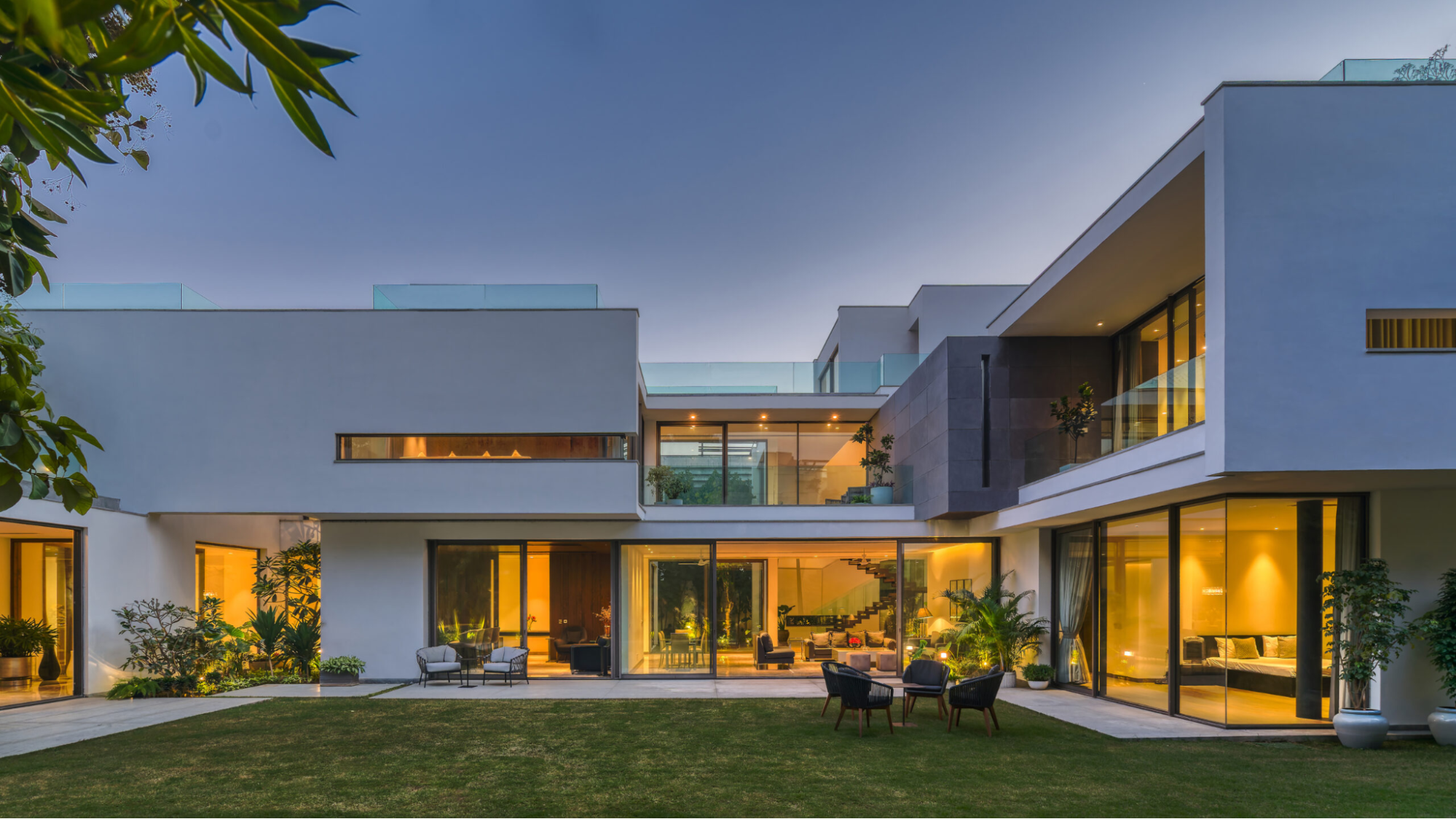
White House
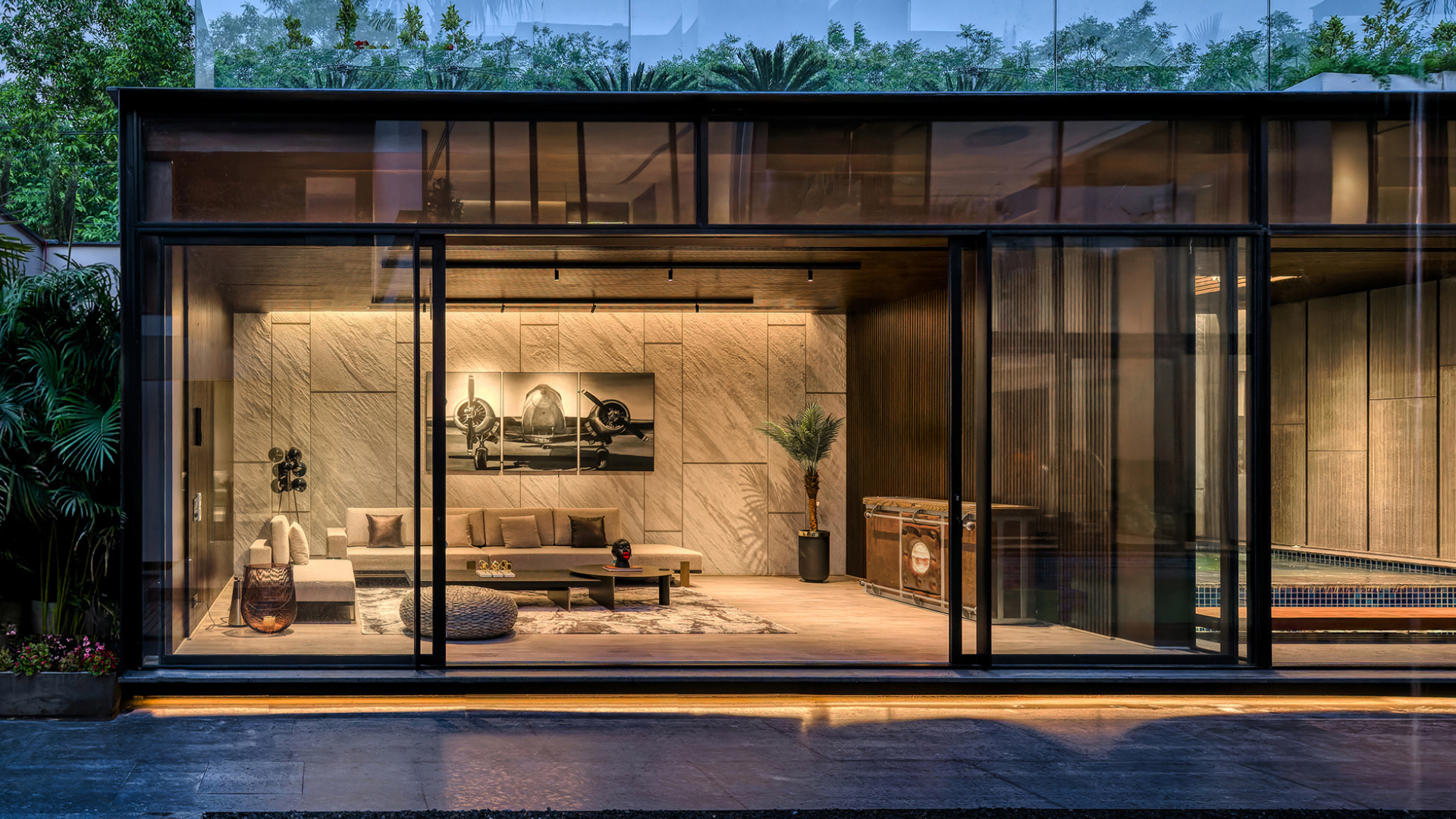
Location: New Delhi; Architect: DADA & Partners
A balcony window is not really about the frame or the glass.
It is about what happens after six months, after one monsoon, and after the first summer heat wave.
That is usually when the real performance shows up — and when most people realise the difference between a window that just looks good and a system that actually works.
Choosing aluminium windows for balconies in India involves more variables than most homeowners realise. Floor level, orientation, building exposure, glass type, society rules — all of these change what the right answer looks like for your specific project.
This guide covers all of it practically.
Why Balcony Window Selection Matters
How the wrong window ruins balcony usability
A balcony window that leaks during monsoon doesn’t just cause inconvenience — it can damage flooring, walls, and furniture over time. A window that traps heat makes the balcony unusable through summer afternoons. One that rattles in the wind becomes a daily irritant.
None of these shows up on installation day.
What balcony windows need to handle in Indian conditions
- Monsoon — driving rain, wind pressure, water infiltration risk
- Summer — direct solar heat gain, especially in west and south-facing balconies
- Dust — urban pollution and construction dust ingress
- Noise — traffic, urban activity, especially in apartments near roads
Balcony windows vs balcony railings
This is a design choice that affects everything downstream. A railing-only balcony is open. A glazed balcony needs windows that handle full weather exposure. The decision to enclose a balcony changes the specification significantly — and slim aluminium sliding systems designed for indoor-outdoor living are the most common solution for full enclosure.
Types of Aluminium Windows for Balconies
Sliding aluminium windows — the most popular choice
Sliding systems work well for balconies because they don’t need swing clearance. They save floor space, are easy to operate, and support large glass panels. AluBUILD sliding windows support openings up to 5 sqm per shutter — suitable for most apartment balcony configurations.
Casement windows for balconies
Casement windows offer better sealing and airflow, but need swing clearance. For compact balconies, this can be a problem. For larger private terraces and villa balconies, casement systems are a strong option.
Floor-to-ceiling slim sliding windows
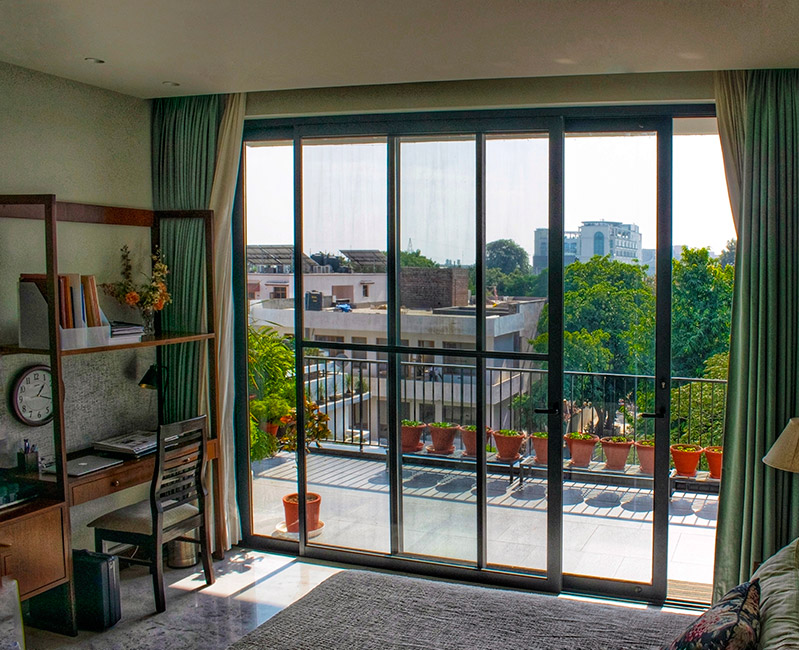
These maximise the view and light — particularly popular in apartments where the balcony view is a key feature. Slim aluminium sliding windows achieve this with narrow frames that don’t obstruct sightlines.
Folding and bifold systems
For wider openings on terraces or villa patios, bifold systems fold and stack to fully open the balcony wall. These create the seamless indoor-outdoor connection that slim aluminium sliding door systems are designed for.
Fixed glass with ventilation openings
For very high floors where wind load is significant, a fixed large glass panel with a smaller openable section is the safer specification. Maximum glass area, minimum structural risk.
Louvre windows for balcony ventilation
In some configurations — especially utility balconies — louvre windows provide continuous airflow without full glass exposure.
Choosing by Apartment Floor Level
This is the section most guides skip. Floor level changes the specification significantly.
Ground and lower floors (1st to 3rd)
Privacy and security are the primary concerns. Dust ingress is also higher at lower levels. Standard sliding systems with good sealing work well. Mosquito mesh is almost always needed.
Mid-rise floors (4th to 12th)
Wind load becomes more relevant but is manageable with standard tested systems. Standard double-glazed units are worth considering for noise reduction from urban environments. Systems should be tested for water tightness — ALCOI systems are confirmed watertight at 600 Pa (EN 1027, Class 9A).
High-rise floors (above 12th)
Wind pressure at high floors is significantly higher. Laminated glass becomes important — if the glass breaks, it stays intact rather than falling. Fully tested system aluminium windows designed for high-wind conditions are the correct specification here — not standard fabricated windows. IS 875 Part III structural calculations should be confirmed.
Penthouse and rooftop
The highest heat exposure and most unpredictable wind turbulence. Premium lift-and-slide systems like SkyLITE — which support up to 7.5 sqm panels and 300 kg shutters — are used where maximum glass area and structural performance are both required.
Glass Selection for Balcony Windows
Most homeowners focus on frame finish first. Performance is actually driven more by glass.
Single vs double glazing
Single glass is still widely used but struggles with heat and noise in urban conditions. Double-glazed units (DGU) provide meaningfully better thermal stability and sound reduction. For mid-rise and high-rise balconies, DGU is worth the investment.
Toughened vs laminated glass
Toughened glass is strong. Laminated glass is safer — it stays bonded even after breakage. For high-rise balconies, laminated glass is strongly preferred because the risk of falling glass is eliminated. Most well-specified balcony projects use toughened-laminated (tempered-laminated) combinations.
Tinted and reflective glass
For west and south-facing balconies, tinted or reflective glass significantly reduces afternoon solar heat gain. This is one of the most impactful decisions for balcony comfort — more so than frame choice for heat management. How different glass types affect energy efficiency explains the performance logic.
Low-E glass
Increasingly common in premium balcony projects. Reduces heat transfer while maintaining daylight — the right balance for balconies that need to stay usable through Indian summers.
Performance Factors to Check Before Buying
Water tightness
Ask specifically about watertightness test results. Systems that have passed independent testing — like EN 1027 water penetration at 600 Pa — are specifiable with confidence for Indian monsoon conditions. ALCOI’s performance test data is publicly available.
Wind load rating
For floors above the 6th, ask for IS 875 Part III structural confirmation or ASTM structural performance test data. This is not standard practice with most fabricators — but it should be.
Air sealing
Gaps in frame sealing allow dust, pollution, and sound ingress. Look for systems with EPDM gasket sealing at all frame junctions.
Mosquito mesh
Retractable mesh integrated into the window frame is the cleanest solution. Fixed mesh is more economical. Cheap standalone mesh screens rattle and fail quickly.
Hardware
Handles, locks, and rollers decide how the system feels after two years of use. For sliding systems, INOX (stainless steel) rollers last significantly longer than standard nylon.
Design Considerations for Indian Apartments
Society and RERA rules
Many residential societies restrict visible changes to balcony exteriors. Before specifying any enclosure system, confirm:
- What glass type and colour the society permits
- Whether the builder’s facade design restricts colour or finish
- Whether a formal approval process is needed
Enclosing an open balcony
Technically requires structural review in most cases. The floor slab opening and lintel condition need to be checked before installing a full-height window system. This is often overlooked during purchase.
Maintenance and cleaning
High-rise balcony windows cannot be cleaned from outside. Window type affects cleaning access — systems that allow the sash to tilt or open inward make maintenance significantly easier.
ALCOI India — Aluminium Balcony Windows Across All Building Types
ALCOI India is among the top aluminium windows and doors manufacturers in India, with completed projects across low-rise apartments, mid-rise residential towers, and luxury high-rise buildings.
For balcony applications specifically:
- Standard apartments — AluBUILD sliding system: tested, consistent, available in single and DGU configurations
- Premium mid-rise and high-rise — AluLITE premium sliding: slim profiles, DGU support, INOX hardware
- Luxury villas and penthouses — SkyLITE lift-and-slide: up to 7.5 sqm, 300 kg shutter, flushed floor track
- Minimal facades — SkyLINE sliding: 20mm mullion, up to 9 sqm panels, corner opening option
All systems are tested under ASTM E330 (structural performance confirmed at 1300 Pa, 165.72 km/h) and EN 1027 (water tightness Class 9A). IS 875 Part III structural calculations are included as standard with commercial proposals.
Custom sizing, glass selection, finish options, and mesh integration are available across the range. See all ALCOI aluminium window systems.
FAQs
Which type of aluminium window is best for a balcony in India?
Sliding systems are the most practical for space-saving. For better performance and views, slim or system aluminium windows with floor-to-ceiling glass are preferred. For very high floors, fully tested system windows with laminated glass and structural wind load confirmation are the right specification.
Are sliding or casement windows better for apartment balconies?
Sliding windows are more practical for most apartment balconies because they don’t need swing clearance. Casement windows offer better sealing and airflow but need space to open — better suited for larger villa terraces and private balconies.
What glass is best for balcony windows, toughened or laminated?
Laminated glass is safer for balconies, especially in high-rise buildings — it stays intact even after breakage rather than shattering. Toughened-laminated (tempered-laminated) combinations are the preferred specification for high-exposure balcony applications.
How do I prevent rain from entering through my balcony windows?
Proper drainage design, quality EPDM gasket sealing, and correctly installed sliding or system windows are the key factors. Poor installation — not poor products — is most often the cause of water ingress in balcony windows.
Can I install floor-to-ceiling aluminium windows on my apartment balcony?
Yes, but it depends on the building structure, wind load conditions at your floor level, and society approvals. For high-rise apartments, structural review and use of tested system windows with wind load confirmation are important.
What is the standard size for a balcony window in Indian apartments?
There is no fixed standard. Balcony window dimensions depend on apartment design, slab opening size, and builder specifications. Custom sizing is the norm, which is why working with a manufacturer who supports custom configurations is important.
Does ALCOI India supply aluminium windows for balconies in high-rise apartments?
Yes. ALCOI supplies sliding, lift-and-slide, and minimal system aluminium window configurations for balconies across low-rise, mid-rise, and high-rise residential buildings. Systems are tested for high-wind structural performance and Indian monsoon conditions. Contact ALCOI at alcoi. in or +91 987 875 0055.
Who are the top aluminium windows and doors manufacturers in India for balcony applications?
ALCOI India is among the leading manufacturers, offering tested and certified balcony window systems from standard AluBUILD sliding to premium SkyLITE lift-and-slide configurations. With over 500 completed residential and commercial projects across India and a 25-city service network, ALCOI supports balcony window projects from specification through installation and maintenance.